Archive navigation
Knowledge Path
Thinker
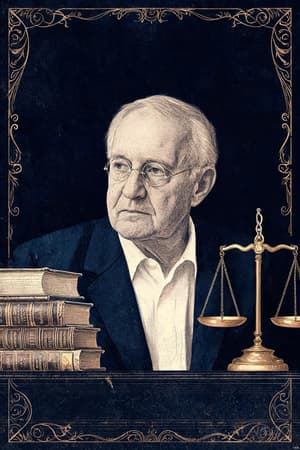
John Rawls
Books
Quotation archive
Selected Quotes
“Among the essential features of this situation is that no one knows his place in society, his class position or social status, nor does anyone know his fortune in the distribution of natural assets and abilities, his intelligence, strength, and the like. The principles of justice are chosen behind a veil of ignorance.”
“Justice is the first virtue of social institutions, as truth is of systems of thought. A theory however elegant and economical must be rejected or revised if it is untrue; likewise laws and institutions no matter how efficient and well-arranged must be reformed or abolished if they are unjust.”
“An overlapping consensus is a consensus in which the same political conception of justice is affirmed by the opposing religious, philosophical, and moral doctrines.”
“Individuals have rights, and there are things no person or group may do to them without violating those rights.”
“So act that you use humanity, whether in your own person or in the person of any other, always at the same time as an end, never merely as a means.”
Biography
John Bordley Rawls was born on February 21, 1921, in Baltimore, Maryland, and died on November 24, 2002. He came from a prominent legal and political family: his father, William Lee Rawls, was a successful attorney, and his mother, Anna Abell Stump Rawls, was active in civic affairs and voting rights advocacy. Rawls later credited his concern with justice partly to his mother's example. Two of his younger brothers died after contracting illnesses from him in childhood, a tragedy he carried throughout his life and that shaped his sensitivity to moral luck and contingency.
Rawls studied at Princeton University, where he completed his doctorate in 1950 under the supervision of Walter Kaufmann and others, having written on moral knowledge. After Princeton he held positions at Cornell University, the Massachusetts Institute of Technology, and, from 1962, Harvard University, where he spent the remainder of his career. His military service during the Second World War, in the Pacific theater as an infantryman, interrupted his studies and left a deep impression; he later remarked that his experience of the war and of the Holocaust confirmed his rejection of the idea that political order could be trusted to ordinary human decency without just institutions. The Stanford Encyclopedia of Philosophy notes that Rawls was by temperament modest and self-critical, revising his work extensively and publishing relatively little, yet exercising an influence on political philosophy comparable to that of any thinker in the twentieth century.
Historical Context
Rawls wrote in the aftermath of a period in which political philosophy was widely thought to be dead or moribund. Logical positivism had dismissed normative claims as cognitively meaningless, and the dominant traditions in Anglophone philosophy, ordinary language analysis and the later Wittgenstein, had turned away from systematic normative theory. In political thought, utilitarianism in the tradition of Bentham and Mill had long supplied the working framework of welfare economics and public policy, while the cold war rivalry between liberal democracy and state socialism pressed the question of whether a principled defense of liberal institutions could be given at all.
A Theory of Justice, published in 1971, was widely received as having revived political philosophy as a serious enterprise. Rawls self-consciously positioned his work against utilitarianism, arguing that it failed to take seriously the separateness of persons, and against intuitionism, which offered no systematic method for resolving moral conflict. He sought instead to revive the social contract tradition of Locke, Rousseau, and Kant, recasting it as a device of representation rather than a historical claim. The Internet Encyclopedia observes that the book appeared at a moment of acute social conflict in the United States, the civil rights movement, the Vietnam War, and debates over redistribution, and that its ambition to derive principles of justice that free and equal persons could accept gave it an immediate and lasting resonance.
Core Ideas
The original position is the centerpiece of Rawls's theory. It is a hypothetical choice situation in which parties select the principles that will govern the basic structure of society. To ensure that the choice is fair, the parties are placed behind a veil of ignorance: no one knows their place in society, their class position or social status, their natural talents, their conception of the good, or the historical period in which they live. Stripped of the knowledge that could bias them toward their own advantage, the parties are forced to choose principles impartially. Rawls calls the resulting conception justice as fairness, because the original position embeds fairness into the very procedure by which principles are selected.
The veil of ignorance is the device that ensures impartiality. Because the parties do not know whether they will be born rich or poor, talented or disadvantaged, advantaged or marginalized, they have reason to choose principles that protect the worst-off position. They cannot tailor principles to their own circumstances, and so the choice they make is one that any rational person, whatever their situation, could be required to accept. Rawls insists that this is not an appeal to universal benevolence but to prudence under conditions of uncertainty: the parties choose as they would if they had to live under the principles they select, without knowing who they will be.
The two principles of justice are the outcome Rawls argues the parties would choose. The first principle guarantees to each person an equal right to the most extensive scheme of equal basic liberties compatible with a similar scheme of liberties for all. The second principle governs social and economic inequalities: they must be arranged so that they are both to the greatest benefit of the least advantaged (the difference principle) and attached to offices and positions open to all under conditions of fair equality of opportunity. The first principle has lexical priority over the second, meaning that liberty cannot be traded for economic gain, and fair equality of opportunity has priority over the difference principle. The Stanford Encyclopedia emphasizes that these principles are designed to express the freedom and equality of citizens as moral persons capable of forming and pursuing a conception of the good.
The difference principle is the most distinctive and controversial element. It permits inequalities only insofar as they work to the advantage of the least well-off. Rawls argues that natural talents and social starting points are morally arbitrary, matters of luck rather than desert, and that the benefits they confer should be arranged to benefit everyone, especially the least advantaged. This does not require strict equality, since incentives may generate productivity that raises the position of the worst-off, but it treats the distribution of natural assets as a common asset whose benefits must be shared.
Philosophy
Rawls described his method as Kantian constructivism. The principles of justice are not discovered as independent moral facts but constructed by a procedure that models the conception of citizens as free and equal and of society as a fair system of cooperation. The original position is not an assembly that actually meets but a device of representation whose constraints, the veil of ignorance, the rationality of the parties, the list of alternatives, encode substantive moral ideals. This distinguishes Rawls from both utilitarianism, which aggregates preferences without attending to the separateness of persons, and from intuitionism, which relies on unsystematic judgment. The constructivist move allows the theory to be principled without claiming access to a moral order independent of human practical reason.
In his later work, Rawls refined the theory to address the fact of pluralism. Political Liberalism (1993) argues that a just society must be stable under conditions of reasonable disagreement about the good, since free institutions inevitably generate a plurality of comprehensive doctrines, religious, philosophical, and moral. The conception of justice must therefore be freestanding, justified by public reason rather than by any single comprehensive view, and must secure an overlapping consensus among reasonable doctrines. This turn from a comprehensive moral doctrine to a political conception was a major development, addressing the charge that A Theory of Justice presupposed a controversial liberal perfectionism.
Major Works
A Theory of Justice (1971; revised edition 1999) is Rawls's masterwork and the foundational text of contemporary political philosophy. It sets out the original position, the veil of ignorance, and the two principles of justice, and develops their application to institutions, civil disobedience, and the obligation to obey the law. Political Liberalism (1993) extends the theory to the problem of stability amid pluralism, introducing the ideas of public reason, overlapping consensus, and the burdens of judgment. The Law of Peoples (1999) applies the theory to international relations, distinguishing liberal from decent peoples and defending a limited, non-cosmopolitan conception of global justice. Justice as Fairness: A Restatement (2001), compiled from his lectures, offers a concise and final statement of the theory, clarifying the relations among the principles and responding to decades of commentary.
Famous Quotes
Rawls's prose is precise rather than aphoristic, but two passages have become canonical. The opening of A Theory of Justice declares that justice is the first virtue of social institutions, as truth is of systems of thought, a statement that frames the priority of justice over efficiency and aggregate welfare. The description of the veil of ignorance, holding that no one knows his place in society, his class position or social status, and that the principles of justice are chosen behind a veil of ignorance, has become the most widely cited device in modern political philosophy. Future Quote Archive entries should identify the work, section, and edition before presenting any wording as Rawls's.
Sources
- Stanford Encyclopedia of Philosophy, "John Rawls." Authoritative survey of the theory of justice, political liberalism, and the law of peoples.
- Internet Encyclopedia of Philosophy, "John Rawls." Accessible account of the original position, the veil of ignorance, and the two principles of justice.
- John Rawls, A Theory of Justice, revised edition (Harvard University Press, 1999). The primary text for all central claims about justice as fairness.
Related Thinkers
Rawls worked within and against the social contract tradition of Locke, Rousseau, and Hobbes, recasting the contract as a hypothetical device of representation rather than a historical event. His deepest philosophical debt is to Kant, whose moral philosophy supplied the constructivist framework and the conception of persons as free and equal autonomous agents. His principal opponents were the utilitarians Bentham and Mill, against whose aggregation of welfare he directed the charge that it fails to take seriously the separateness of persons. Aristotle is a more distant but real presence, in the attention to the basic structure of a society conceived as a cooperative venture for mutual advantage. The relations among these thinkers should be read as a conversation about what justice requires of institutions, not as evidence that Rawls simply inherited any single tradition.
Learning Path
Part of a Structured Collection
Political Philosophy & Justice
A structured learning path through political philosophy and the theory of justice, from the great social contract thinkers to the most urgent contemporary debates about freedom, equality, democracy, and power.
Continue learning path →
Ethics & Moral Wisdom
A structured learning path through moral philosophy, from the great ethical theories of duty, utility, and virtue to the practical art of making ethical decisions in everyday life.
Continue learning path →
Understanding Reality
A learning path through truth, knowledge, reality, and perception — from Plato to existential philosophy.
Continue learning path →
Understanding Yourself
A learning path through self-knowledge, identity, wisdom, and practical discernment — from Socrates to modern philosophy.
Continue learning path →
Continue Learning
Knowledge NetworkNext Step
Continue your learning path
- book
A Theory of Justice
Related through Social Contract Theory
- quote
Rawls: The Veil of Ignorance
Related through Social Contract Theory
- collection
Ethics & Moral Wisdom
Related through Social Contract Theory
- answer
What Is the Veil of Ignorance? Rawls's Thought Experiment
Related through Social Contract Theory
- topic
Philosophy of Life
Related through Social Contract Theory
- quote
Rawls: Justice Is the First Virtue of Institutions
Related through Social Contract Theory
- topic
Justice
Related through Social Contract Theory
- wisdom
Rights
Related through Social Contract Theory
Archive references
Sources
- 01John RawlsBy Stanford Encyclopedia of PhilosophyConsult source
- 02John RawlsBy Internet Encyclopedia of PhilosophyConsult source
- 03A Theory of JusticeBy John RawlsCambridge, MA: Harvard University Press, 1999 (revised edition).
Source and quality checks completed
Quality check completed 2026-07-31