Archive navigation
Knowledge Path
Thinker
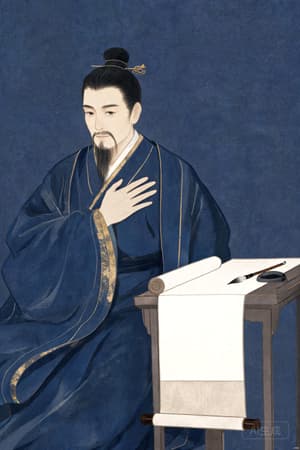
Wang Yangming
Wisdom Concepts
Quotation archive
Selected Quotes
“No man is devoid of a heart sensitive to the suffering of others. Suppose a child were about to fall into a well: anyone who saw it would experience a heart of alarm and distress. This would not be in order to gain favor with the child's parents, or to seek praise from neighbors and friends, or out of dislike for the child's cries.”
“The heart of compassion is the sprout of humaneness. The heart of shame is the sprout of rightness. The heart of deference is the sprout of ritual propriety. The heart of right and wrong is the sprout of wisdom. People have these four sprouts just as they have four limbs.”
“He who exerts his mind to the utmost knows his nature. He who knows his nature knows Heaven. To preserve one's mind and nourish one's nature is the way to serve Heaven.”
Biography
Wang Yangming (1472-1529) was a Chinese philosopher, military official, and educator of the Ming dynasty. He is the central figure of the School of Mind (xin xue) within Neo-Confucianism and is best known for his teaching that knowledge and action are one. His life is well documented, and his thought is inseparable from his practical career as an administrator and commander.
Historical Context
Wang Yangming worked within the Confucian educational and civil-service world that Zhu Xi's Neo-Confucianism had shaped. He developed his position partly in critical response to what he saw as an overemphasis on external study divorced from genuine moral transformation. His thought also reflects the wider Ming intellectual environment of debate about the sources of moral knowledge.
Core Ideas
Wang Yangming held that the heart-mind is equipped with innate moral knowing (liangzhi), a spontaneous capacity to discern good and evil. On this view, moral principle is not only something discovered outside the self but is already present in the mind's capacity for ethical discrimination. Consequently, cultivation is not primarily the accumulation of external information but the realization and extension of this innate knowing in action.
Philosophy
Wang Yangming rejected a sharp separation between the inner mind and the external world of principle. His famous doctrine of the “unity of knowledge and action” holds that genuine moral knowledge is inseparable from the action that carries it out: to truly know the good is already to be oriented toward doing it. This position makes moral practice central to the very meaning of knowledge.
Major Works
Wang Yangming's writings and recorded conversations are collected in his collected works, and his ideas were transmitted through the lectures and records of his school. He did not produce a single canonical book comparable to the high medieval commentaries, but his teachings exercised wide influence through the records of his students and the court of debate with the School of Principle.
Influence Today
Wang Yangming's thought had a major influence on Chinese and East Asian philosophy, education, and practical ethics. His emphasis on the unity of knowledge and action and on the moral capacity of the heart-mind has been taken up in later reflection on character, leadership, and self-cultivation. Modern readers should distinguish his historical positions from later interpretations and from the School of Principle associated with Zhu Xi.
Sources
See the source records above. This page avoids assigning isolated internet quotations to Wang Yangming without a traceable textual location and translation.
Learning Path
Part of a Structured Collection
Eastern Philosophy
A guided learning journey through Eastern philosophical traditions, including Buddhism, Confucianism, Taoism, and Zen, and the wisdom that unites them.
Continue learning path →
Confucian Wisdom
A guided learning journey through Confucian philosophy, humaneness, Confucius, and the Analects.
Continue learning path →
Continue Learning
Knowledge NetworkNext Step
Continue your learning path
- book
Doctrine of the Mean
Related through Neo Confucianism
- philosophy
Neo-Confucianism
Related through Confucianism
- thinker
Zhu Xi
Related through Neo Confucianism
- topic
Confucianism
Related through Confucianism
- answer
Mencius vs Xunzi — Human Nature Compared
Related through Confucianism
- quote
The Child by the Well
Related through Confucianism
- quote
The Four Beginnings
Related through Confucianism
- philosophy
Chinese Philosophy
Related through Confucianism
Archive references
Sources
- 01Wang YangmingBy Stanford Encyclopedia of PhilosophyConsult source
- 02Neo-Confucianism PhilosophyBy Internet Encyclopedia of PhilosophyConsult source
- 03Chinese PhilosophyBy Internet Encyclopedia of PhilosophyConsult source
- 04The AnalectsBy Confucius; translated by Edward SlingerlandIndianapolis: Hackett Publishing, 2003.
Source and quality checks completed
Quality check completed 2026-08-08