Archive navigation
Knowledge Path
Thinker
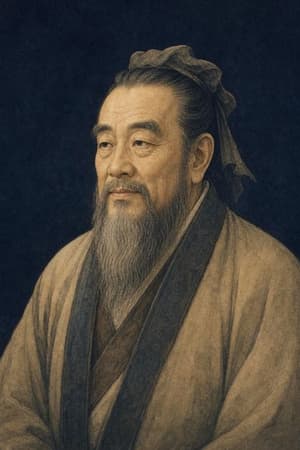
Confucius: Ideas, Biography, Teachings, and Lasting Influence
Philosophy
Books
Wisdom Concepts
Quotation archive
Selected Quotes
“Do not impose on others what you yourself do not desire.”
“At fifteen I set my heart on learning; at thirty I took my stand; at forty I had no perplexities; at fifty I knew the decrees of Heaven; at sixty my ear was attuned; at seventy I could follow my heart's desires without overstepping the bounds.”
“There is one single thread that runs through my Way.”
“One who is Good will necessarily be courageous, but one who is courageous will not necessarily be Good.”
“What you yourself do not want, do not impose upon others.”
“When walking in the company of two other people, I am bound to find a teacher among them. I will pick out their good points and follow them, and I will identify their bad points and correct them in myself.”
“To overcome yourself and return to ritual propriety is Goodness. If for one day you are able to overcome yourself and return to ritual propriety, the entire world will return to Goodness.”
“Do not impose on others what you yourself do not desire.”
“From the Son of Heaven down to the common people, all must consider the cultivation of the person the root of all things.”
“With coarse rice to eat, with water to drink, and my bended arm for a pillow — I still have joy in the midst of these things. Riches and honours acquired by unrighteousness are to me as a floating cloud.”
“No man is devoid of a heart sensitive to the suffering of others. Such a heart is the origin of humaneness.”
“Human nature is good, just as water seeks low ground. There is no person who is not good, just as there is no water that does not flow downward.”
“Learning must never stop. Blue comes from the indigo plant, and yet it is bluer than the plant itself.”
“A virtue is an acquired human quality the possession and exercise of which tends to enable us to achieve those goods which are internal to practices and the lack of which effectively prevents us from achieving any such goods.”
Biography
Confucius, known in Chinese as Kong Qiu and honorifically as Kongzi (“Master Kong”), is traditionally dated to 551–479 BCE. He is remembered as a teacher, adviser, and interpreter of an inherited cultural tradition rather than as the author of a philosophical treatise. The evidence for his life is uneven. Later biographies, especially the account associated with Sima Qian, supplied a vivid narrative of family background, public service, travel, teaching, and disciples. Those accounts are indispensable to the tradition’s memory of Confucius, but they cannot simply be read as modern biography. The earliest sources preserve sayings and scenes more readily than secure chronology.
Confucius was associated with Lu, in the region of present-day Shandong. The Stanford Encyclopedia of Philosophy notes both the conventional birth date and the political fragmentation of the period in which he lived. Tradition presents him as someone who acquired expertise in ritual and classical learning despite modest circumstances, then pursued public employment and taught students. Whether every office later attributed to him can be verified is less important than the recurring picture: a teacher convinced that cultivated persons could improve family life, public conduct, and government.
His name became attached to a large and diverse intellectual inheritance. It is therefore useful to distinguish Confucius from later “Confucianism.” Later thinkers, institutions, commentaries, state practices, and modern reform movements all interpreted his legacy in different ways. A responsible profile begins with the Analects (Lunyu), a collection of conversations, brief scenes, and sayings attributed to Confucius and his circle. Even this text requires care. It was compiled and transmitted after Confucius’s lifetime, and scholars debate its layers and the degree to which particular passages preserve the historical teacher’s own voice.
Historical Context
Confucius lived during the late Spring and Autumn period, when the authority of the Zhou order had weakened and regional states competed for power. Political disorder, changing aristocratic structures, and anxiety about proper rule formed the background to his teaching. His appeal to the past was not a call to copy antiquity mechanically. Classical ritual, music, historical memory, and exemplary conduct offered materials through which people could learn judgment and reshape their dispositions.
This setting also clarifies why education matters so much in the Analects. Learning was not merely the acquisition of information. It involved attentive study, imitation of worthy models, reflection, practice, and correction in conversation with others. The educated person, often described through the ideal of the junzi (“exemplary person” or “noble person”), is not defined simply by birth. The ideal is ethical: a person who can act with reliability, restraint, discernment, and concern for others.
Confucius’s political thought cannot be separated from this moral formation. He did not describe government as a technical problem alone. Officials and rulers shape a community by their own conduct, by the standards they reward, and by the patterns of trust they establish. This emphasis is one reason his thought has remained relevant to discussions of leadership; it is also a reason not to turn him into a modern management writer. His vocabulary belongs to a world of family roles, ritual obligations, court politics, and inherited norms. Interpretation must make those differences visible.
Core Ideas
Several terms organize the ethical landscape associated with Confucius. Ren is often translated as humaneness, benevolence, or authoritative conduct. No single English word settles its meaning. In the Analects, it concerns a manner of relating to other people that is responsive, respectful, and morally serious. The Stanford Encyclopedia describes it as interaction guided by a sense of what is good from others’ perspectives. That formulation is useful because it avoids treating ren as private feeling alone.
Li, often translated as ritual propriety, refers to rites, ceremonies, manners, and forms of conduct. It is sometimes mistaken for empty etiquette. For Confucius, however, ritual can train attention and emotion. A practiced form of greeting, mourning, deference, or public ceremony can help a person recognize what a relationship asks of them. Ritual without moral seriousness becomes hollow; moral aspiration without learned forms can become unsteady or self-regarding. The two belong together.
Other important terms include yi (rightness or righteousness), zhi (wisdom), xin (trustworthiness), and xiao (filial responsibility). They do not function as a checklist. They describe capacities that must be exercised in changing circumstances. Wisdom includes the ability to judge people and situations; trustworthiness concerns keeping faith in one’s dealings; righteousness asks whether an action is fitting rather than merely advantageous. This makes Confucian ethics a practice of discernment, not a rulebook with automatic answers.
Philosophy
Confucius is often read as a virtue ethicist because he asks what sort of person one should become. Yet that label should remain an aid, not a substitute for reading the texts. His philosophy begins from relationships: child and parent, friend and friend, student and teacher, minister and ruler, member and community. These relationships are not interchangeable, and they carry different responsibilities. The aim is not obedience for its own sake but a form of conduct in which respect, care, and judgment can sustain social life.
The ideal of the junzi is central here. An exemplary person studies, reflects, accepts correction, and does not make external success the sole measure of worth. In this respect, Confucius ties personal cultivation to political life without collapsing one into the other. A ruler who relies only on punishment may secure compliance; a ruler who governs through virtue and proper conduct can, in the best case, foster a community in which people understand why certain actions matter.
This is not a philosophy of effortless harmony. The Analects repeatedly shows disagreement, failure, and difficult judgment. It also warns against clever speech, empty display, and confidence unsupported by learning. Contemporary readers may find parts of its hierarchical social vocabulary difficult or contestable. That is a reason for critical engagement, not for flattening the tradition into slogans about “harmony.” A good reading asks how its accounts of role, ritual, and moral formation can be understood historically and where they require challenge.
Major Works
The principal text associated with Confucius is the Analects. It is not a book he is known to have written in the manner of Plato’s dialogues or Aristotle’s treatises. Rather, it is a collection assembled by later transmitters from material associated with his teaching. Its twenty books contain short exchanges, observations, and occasional narrative scenes. Because translation choices matter greatly, readers should identify the edition they use and consult more than one translation when a passage bears philosophical weight.
Confucius is also traditionally linked with the transmission and interpretation of older classics. Those traditional associations have been influential, but they should not be stated as settled authorship claims without qualification. The most secure starting point for his thought remains the Analects, read alongside early Chinese historical and ritual texts and modern scholarship on their formation.
Famous Quotes
The most widely cited Confucian formulation of reciprocity appears in Analects 15.24. In Edward Slingerland’s translation, Confucius says: “What you yourself do not want, do not impose upon others.” The passage answers a question about a single guiding word for life and identifies shu, often translated as reciprocity. It should not be detached from the rest of the text: it is a discipline of imagining another person’s position while remaining attentive to the concrete demands of a relationship.
Many popular sayings circulated online under the label “Confucius says” do not have a secure source in the Analects. For that reason, this archive should not use them. Quotations added to this profile must name a translation and, where possible, the book and passage number.
Influence Today
Confucius’s influence reaches far beyond the historical figure. His teachings became central to later Confucian traditions in China and, through distinct historical paths, to intellectual and educational cultures in Korea, Japan, Vietnam, and diaspora communities. Those traditions are not uniform. Neo-Confucian thinkers, political institutions, modern reformers, and contemporary scholars have all read the classical texts differently.
Today, Confucius is often invoked in discussions of education, family responsibility, civic trust, ethical leadership, and intercultural philosophy. The most fruitful use of his thought is neither uncritical celebration nor quick dismissal. It is a careful encounter with an account of moral learning in which character is developed through practice with others. That encounter can illuminate present questions about discipline, purpose, and public responsibility while preserving the historical specificity of the tradition.
Sources
- Stanford Encyclopedia of Philosophy, “Confucius.” A scholarly overview of the sources, ritual, virtue, family, and political thought associated with Confucius.
- Confucius, The Analects, trans. Edward Slingerland (Hackett, 2003). Quote in this article: 15.24.
- Internet Encyclopedia of Philosophy, “Confucius.” A supplementary academic overview of the Analects and the later tradition.
Related Thinkers
Learning Path
Part of a Structured Collection
Eastern Philosophy
A guided learning journey through Eastern philosophical traditions, including Buddhism, Confucianism, Taoism, and Zen, and the wisdom that unites them.
Continue learning path →
Ancient Wisdom
A learning path through foundational questions of flourishing, virtue, harmony, duty, and the art of living.
Continue learning path →
Confucian Wisdom
A guided learning journey through Confucian philosophy, humaneness, Confucius, and the Analects.
Continue learning path →
Continue Learning
Knowledge NetworkNext Step
Continue your learning path
- topic
Confucianism
Related through Chinese Philosophy
- answer
Mencius vs Xunzi — Human Nature Compared
Related through Chinese Philosophy
- book
Analects
Related through Confucianism
- answer
What Is Confucianism?
Related through Confucianism
- philosophy
Confucianism
Related through Discipline
- answer
Confucianism vs Legalism: What''s the Difference?
Related through Chinese Philosophy
- book
Doctrine of the Mean
Related through Chinese Philosophy
- philosophy
Neo-Confucianism
Related through Chinese Philosophy
Archive references
Sources
- 01ConfuciusBy Stanford Encyclopedia of PhilosophyConsult source
- 02The AnalectsBy Confucius; translated by Edward SlingerlandIndianapolis: Hackett, 2003.
- 03ConfuciusBy Internet Encyclopedia of PhilosophyConsult source
Source and quality checks completed
Quality check completed 2026-07-21