Archive navigation
Knowledge Path
Thinker
Alvin Plantinga: Reformed Epistemology & the Free Will Defense
Wisdom Concepts
No published record
Quotation archive
Selected Quotes
“The God Hypothesis... is that there is a superhuman, supernatural intelligence who deliberately designed and created the universe and everything in it, including us... The God Hypothesis is a scientific hypothesis about the universe, and it is amenable, at least in principle, to scientific investigation.”
“In its simplest form the problem is this: God is omnipotent; God is wholly good; and yet evil exists... These propositions are, at first sight, inconsistent: if they are all true, God cannot be wholly good, or cannot be omnipotent... I think, however, that we can show that there is no valid solution of the problem.”
“If it is rational to believe in other minds without evidence or argument, then it can be rational to believe in God without evidence or argument. The believer is within his epistemic rights in holding belief in God as basic, even without argument or evidence.”
Biography
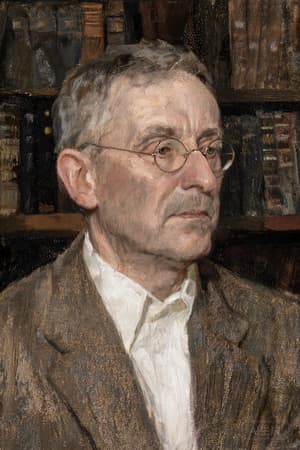
Alvin Plantinga was born in 1932 in Ann Arbor, Michigan, into a family of Dutch Reformed immigrants. His father held a PhD in philosophy from Duke, and the family moved between Michigan, Iowa, and North Dakota during Plantinga's childhood. He studied at Harvard and the University of Michigan before completing his doctorate at Yale in 1958, writing on the philosophy of perception under Robert Sleigh. He taught at Wayne State University and Calvin College before joining the faculty at the University of Notre Dame in 1982, where he spent the remainder of his career and helped build one of the most influential philosophy of religion programs in the English-speaking world.
Plantinga is widely credited with reviving the respectability of Christian philosophy within the analytic tradition. In the middle of the twentieth century, the logical positivists had declared religious claims meaningless, and the dominant mood in Anglophone philosophy was that the arguments for God's existence were dead — interesting historically but philosophically inert. Plantinga, along with Richard Swinburne and a few others, reversed that judgment. His work spans epistemology, modal logic, metaphysics, and the philosophy of religion, and it has shaped the field in ways that are now so deeply embedded that it's easy to forget they were ever contested.
His major works include God and Other Minds (1967), which examined the analogy between belief in God and belief in other minds; The Nature of Necessity (1974), a landmark in modal metaphysics that also contained a new version of the ontological argument; the "Reformed epistemology" essays co-authored with Nicholas Wolterstorff in Faith and Rationality (1983); and the monumental three-volume series on warrant — Warrant: The Current Debate (1993), Warrant and Proper Function (1993), and Warranted Christian Belief (2000) — which together develop a comprehensive theory of epistemic justification with direct application to the question of God.
Key Ideas
Reformed Epistemology and Properly Basic Belief
Plantinga's most distinctive and controversial contribution is the claim that belief in God can be properly basic — that is, rational, warranted, and epistemically acceptable even without being inferred from other beliefs or supported by arguments. This is the thesis of Reformed epistemology, developed in collaboration with Nicholas Wolterstorff and drawing on the theological tradition of John Calvin and Abraham Kuyper, though Plantinga presents it as a piece of analytic epistemology, not as theology.
The background is a critique of classical evidentialism — the view, associated with figures like W. K. Clifford and inherited from the Enlightenment, that belief is rational only if it is supported by adequate evidence. On this view, faith without evidence is irrational, and the theist who cannot produce a good argument for God's existence is epistemically irresponsible. Plantinga's response is that evidentialism is not a neutral standard. It assumes that belief in God must be justified the same way a scientific hypothesis is justified — by inference from neutral, shared evidence — but there is no reason to accept that assumption. We hold many beliefs that are perfectly rational without being inferred from anything: belief in the existence of other minds, belief in the reliability of memory, belief in an external world. These are basic beliefs — they are not derived from more fundamental premises but are the foundation on which other beliefs rest. Plantinga's claim is that belief in God can function the same way.
The argument is not that belief in God is immune to challenge. Plantinga is careful to say that there can be defeaters — evidence that undermines a properly basic belief. If, for instance, the problem of evil could be shown to make God's existence logically impossible, that would defeat theistic belief. Plantinga's work on the free will defense is, in part, an argument that no such defeater succeeds. The point is rather that the burden of proof does not automatically rest on the theist. A person who believes in God is not irrational merely because she lacks a proof; her belief can be warranted by a properly functioning cognitive faculty — what Plantinga, following Calvin and Thomas Aquinas, calls the sensus divinitatis — that is designed to produce belief in God in appropriate circumstances.
The Free Will Defense
Before Reformed epistemology, Plantinga made his name with the free will defense, first articulated in God, Freedom, and Evil (1974). The problem was the logical problem of evil, formulated powerfully by J. L. Mackie: if God is omnipotent, omniscient, and perfectly good, then God would prevent all evil. But evil exists. Therefore, the traditional concept of God is logically inconsistent with the existence of evil, and theism is incoherent.
This was considered, at the time, a devastating objection. Mackie himself believed it was decisive. What Plantinga showed was that the argument as stated contains a hidden premise — the premise that an omnipotent, perfectly good being would create the best of all possible worlds, or at least a world without evil. Plantinga's response is that there may be no best of all possible worlds (for any world, God could create a better one), and more importantly, that a world containing significantly free creatures is more valuable than a world of automata. If God's creatures are genuinely free, then even God cannot guarantee that they will always choose good — freedom entails the possibility of evil. And if every creaturely essence that God could create would, if created, do at least some wrong, then even an omnipotent being cannot create a world with free creatures and no evil.
The result is a defense, not a theodicy: Plantinga does not claim to know that this is the actual reason for evil, only that it is a possible reason, and that the possibility is enough to defeat the logical argument. Mackie conceded the point, and the logical problem of evil — the claim that theism is internally contradictory — is now generally considered refuted. The evidential problem of evil — the claim that evil makes God's existence improbable even if not impossible — remains live, and is where Plantinga's work meets Swinburne's probabilistic approach and Hick's soul-making theodicy.
The Modal Ontological Argument
Plantinga also developed a version of the ontological argument, drawing on the modal logic he had mastered in The Nature of Necessity. The argument, which descends from Anselm but is reconstructed in the vocabulary of possible worlds, runs roughly as follows: if it is even possible that a maximally great being exists, then such a being exists in some possible world. But a maximally great being exists necessarily if it exists at all — that is, its existence is not contingent on any particular world. Therefore, if it is possible that a maximally great being exists, it exists in all possible worlds, including the actual one.
Plantinga is careful about the argument's force. He does not present it as a proof — he has said that he does not think it proves God's existence. The key premise, that maximal greatness is possible, is something that the theist will accept and the atheist will deny, and the argument cannot settle the disagreement on its own. But it does show that the ontological argument, far from being the dead letter that Kant and others declared it, is a live formal structure that forces a serious choice: either maximal greatness is possible, in which case God exists, or it is not possible, in which case there is something incoherent about the concept of maximal greatness. The argument raises the stakes of the concept's coherence in a way that is philosophically productive whether or not it convinces.
The A/C Model and Warrant
Plantinga's mature epistemology, developed in the Warrant trilogy, is the proper functionalist account of warrant — the property that turns true belief into knowledge. A belief is warranted, on this account, when it is produced by cognitive faculties functioning properly, in the cognitive environment for which they were designed, according to a design plan aimed at truth. This is a general theory of knowledge, not specific to religion, but Plantinga applies it to theistic belief in Warranted Christian Belief (2000).
The application yields what Plantinga calls the A/C model (for Aquinas and Calvin): belief in God is produced by the sensus divinitatis, a cognitive faculty that is part of the human design plan and that, functioning properly, produces belief in God in response to experiences of the natural world, conscience, beauty, the sacred, and other circumstances. If this faculty is functioning properly, theistic belief is warranted — not because it is inferred from arguments but because it is the output of a reliable truth-aimed faculty. The model is, Plantinga concedes, a specifically Christian model; it presupposes theism. But its philosophical point is to show that there is no good reason to think theistic belief is unwarranted — that there is a model on which it is epistemically respectable, and no decisive argument that the model is false.
Influence and Legacy
Plantinga's impact on the discipline is hard to overstate. He and his students — the "Notre Dame school" — effectively created the contemporary field of analytic philosophy of religion as a going concern. Before Plantinga, the philosophy of religion in the analytic tradition was a marginal specialty; after him, it became one of the central areas of the discipline. The free will defense alone changed the landscape of the debate about evil so thoroughly that the logical problem of evil, once considered a knock-down refutation of theism, is now rarely defended in its original form.
His epistemology of religion has been equally consequential. The claim that belief in God can be properly basic has generated an enormous literature — pro and con, from epistemologists, philosophers of religion, cognitive scientists of religion, and theologians. Critics have argued that the model licenses epistemic circularity, that it cannot explain religious disagreement, that it is parochial — a piece of Christian apologetics dressed in epistemological clothing. Defenders have extended the model to other domains and argued that it is, if anything, more plausible than the evidentialist alternative it replaces. The debate continues, but it is a debate that exists because Plantinga created it.
The New Atheists, in works like The God Delusion, have largely ignored Plantinga's arguments, preferring to attack easier targets. This has been widely noted as a weakness of the New Atheist literature, and it is a measure of Plantinga's stature: any serious case against theism must come to terms with his work. For readers approaching the philosophy of God today, Plantinga is the indispensable interlocutor — the thinker who made it impossible to treat theism as philosophically disreputable, and who forced the question of God's existence back into the center of analytic philosophy.
Further Reading
The essential texts are God, Freedom, and Evil (Harper & Row, 1974) for the free will defense, The Nature of Necessity (Oxford University Press, 1974) for the modal ontology, and Warranted Christian Belief (Oxford University Press, 2000) for the mature epistemology. God and Other Minds (Cornell University Press, 1967) remains a rewarding early statement of his approach. For critical engagement, see the essays in Thomas, ed., Religious Epistemology and the Problem of God and the Stanford Encyclopedia of Philosophy entries on "Religious Epistemology" and "The Problem of Evil." Daniel Howard-Snyder's edited collection The Evidential Argument from Evil (Indiana University Press, 1996) collects important responses to the problem Plantinga transformed.
Learning Path
Part of a Structured Collection
Continue Learning
Knowledge NetworkNext Step
Continue your learning path
- book
The City of God by Augustine of Hippo
Related through Philosophy Of God
- book
Dialogues Concerning Natural Religion by David Hume
Related through Philosophy Of God
- topic
God: The Philosophy of the Divine
Related through Philosophy Of God
- thinker
John Hick: Theodicy, Religious Pluralism & Soul-Making
Related through Philosophy Of God
- topic
Sin: The Philosophy of Moral Failure & Redemption
Related through Philosophy Of God
- philosophy
Philosophy of Evil
Related through Philosophy Of God
- quote
Plantinga on Properly Basic Belief: Belief in God Without Proof
Related through Philosophy Of God
- answer
Can Science Prove God?
Related through Philosophy Of God
Archive references
Sources
- 01Religious EpistemologyBy Stanford Encyclopedia of PhilosophyAlston, William. 'Religious Epistemology.' Stanford Encyclopedia of Philosophy.Consult source
- 02The Problem of EvilBy Stanford Encyclopedia of PhilosophyMurray, Michael, and Michael Rea. 'The Problem of Evil.' Stanford Encyclopedia of Philosophy.Consult source
- 03God and Other MindsBy Alvin PlantingaAlvin Plantinga. God and Other Minds. Ithaca: Cornell University Press, 1967.
- 04Warranted Christian BeliefBy Alvin PlantingaAlvin Plantinga. Warranted Christian Belief. New York: Oxford University Press, 2000.
Source and quality checks completed
Quality check completed 2026-08-21