Archive navigation
Knowledge Path
Thinker
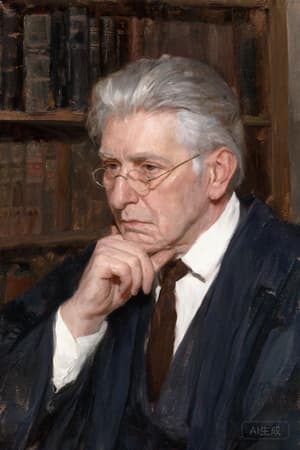
Richard Swinburne: Bayesian Probability & the Existence of God
Wisdom Concepts
No published record
Quotation archive
Selected Quotes
“The God Hypothesis... is that there is a superhuman, supernatural intelligence who deliberately designed and created the universe and everything in it, including us... The God Hypothesis is a scientific hypothesis about the universe, and it is amenable, at least in principle, to scientific investigation.”
“If it is rational to believe in other minds without evidence or argument, then it can be rational to believe in God without evidence or argument. The believer is within his epistemic rights in holding belief in God as basic, even without argument or evidence.”
Biography
Richard Swinburne was born in 1934 and educated at Cambridge, where he studied philosophy, psychology, and theology. He held academic posts at the University of Leeds, the University of Keele, and — most consequentially — the Nolloth Professorship of the Philosophy of the Christian Religion at the University of Oxford, a chair he occupied from 1985 until his retirement in 2002. He is one of a small number of philosophers who have made the existence of God the central project of an entire career, and arguably the most technically ambitious of them all.
What sets Swinburne apart from the long history of natural theology is his decision to take the apparatus of twentieth-century confirmation theory — Bayesian probability, inductive logic, the calculus of evidence — and apply it, with relentless precision, to the classical arguments for God's existence. His major work, The Existence of God (first edition 1979, second edition 1991), is not a collection of arguments in the traditional style of Aquinas or Anselm. It is a sustained formal proof that the probability of God's existence, given the total evidence, is greater than one-half. That claim — that theism is more probable than not — is the spine of everything he has written.
Swinburne's project spans a remarkable trilogy — The Coherence of Theism (1977), The Existence of God (1979), and Faith and Reason (1981) — followed by a tetralogy on Christian doctrine (Responsibility and Atonement, Revelation, The Christian God, and Providence and the Problem of Evil) and later works on the soul, resurrection, and revelation. He has argued not only that God probably exists but that specific Christian doctrines — the Trinity, the Incarnation, the Resurrection — are coherent and, given the prior evidence, probable. He is, in other words, a systematic philosopher in the grand manner, working at the intersection of the philosophy of God and the philosophy of religion.
Key Ideas
Bayesian Natural Theology
Swinburne's signature contribution is the application of Bayes's theorem to the question of whether God exists. Bayes's theorem is a mathematical formula for updating the probability of a hypothesis in light of new evidence. In its simplest form, it says that the posterior probability of a hypothesis H given evidence E is a function of the prior probability of H, the probability of E given H, and the probability of E regardless of H. Swinburne's move was to treat the existence of God as a hypothesis and the features of the universe as evidence, and then to argue that the calculus comes out in theism's favor.
The structure is elegant. Swinburne begins with a prior probability — the probability that God exists before we look at any particular evidence. He argues that theism, understood as the hypothesis that there exists a being who is omnipotent, omniscient, and perfectly good, is a relatively simple hypothesis (because a single infinite being is simpler than many finite beings), and that simplicity is a marker of prior probability. Then he examines each piece of evidence: the existence of a complex universe, its conformity to natural law, its orderliness, the existence of consciousness, the occurrence of miracles, the pattern of religious experience. For each item, he asks whether it is more probable given theism than given naturalism. When the Bayesian calculation is done, he concludes, the probability of theism is greater than one-half.
This is not a proof in the deductive sense. Swinburne is a fallibilist about natural theology. He does not claim that reason forces the conclusion; he claims that the evidence tilts the scales. But the ambition is extraordinary: he is trying to turn the question of God's existence from a matter of intuition, tradition, or blind faith into a matter of evidential probability, calculated in the same way one would calculate the probability of any scientific hypothesis. Whether one finds his priors plausible or not, the project has reshaped how philosophers of religion talk about evidence.
The Cosmological Argument and the Order of the Universe
Within the Bayesian framework, Swinburne offers reconstructed versions of the classical arguments. The cosmological argument, in his hands, becomes an argument from the existence of a complex universe: the fact that there is something rather than nothing, and that the something is governed by natural laws, is more probable given a creator than given the alternative. He does not rely on the principle of sufficient reason in the Leibnizian way; instead, he argues inductively that theism provides a simpler and more probable explanation of cosmic order than the brute-fact hypothesis that the universe just happens to be law-governed.
The teleological argument — the argument from design — receives an especially careful treatment. Swinburne distinguishes the order of the universe (its conformity to simple, elegant laws) from the improbability of its specific initial conditions. He argues that the orderliness of nature, the fine-tuning of physical constants, and the existence of conscious beings are all more to be expected if there is a God than if there is not. The key move is comparative: he does not claim to prove that naturalism cannot explain these features, only that theism predicts them better, and that on Bayesian principles this raises the probability of theism.
This is where Swinburne's project connects most directly with the history of the philosophy of religion. Where Hume and others argued that the design argument fails because the universe is too unlike human artifacts to warrant an inference to a designer, Swinburne responds that the Bayesian framework does not require analogy. The question is not whether the universe resembles a watch but whether the hypothesis of a creator raises the probability of the evidence above its background level. The argument, he insists, is an inference to the best explanation, not an argument from analogy, and that distinction matters.
The Problem of Evil and Theodicy
Swinburne is also a major contributor to the problem of evil. His account, developed most fully in Providence and the Problem of Evil (1998), defends what is known as a free-will defense. God, he argues, has good reasons for creating a world in which human beings possess significant freedom — freedom to choose between good and evil — because only such freedom makes possible the greatest goods: moral responsibility, character formation, and genuine love. A world without the possibility of evil would be a world without the possibility of those goods, and that would be worse, on balance, than a world that contains both evil and freedom.
The argument extends to natural evil — earthquakes, disease, animal suffering. Swinburne suggests that natural evil provides the knowledge and opportunity for certain kinds of moral choice: courage in the face of danger, compassion in response to suffering, the development of character through struggle. He does not claim that every instance of evil is justified by a specific good; he claims that the existence of evil is compatible with the existence of God, and that the Bayesian weight of evil, while real, is not enough to overcome the positive case for theism. This is a theodicy in the classic sense — an attempt to show that evil does not disprove God's existence — and it places him in conversation with John Hick's soul-making approach and Alvin Plantinga's free-will defense, though the three arguments are quite different in structure.
The Cumulative Case
Perhaps Swinburne's most important methodological contribution is the insistence on a cumulative case. No single argument, he concedes, is decisive. The cosmological argument does not prove God; the teleological argument does not prove God; the argument from religious experience does not prove God. But the case is cumulative: each argument adds some probability to the hypothesis, and the aggregate weight of all the arguments, combined with the prior simplicity of theism, pushes the posterior probability above one-half. The image is not a single chain that breaks if one link fails, but a rope of many strands, each adding strength.
This is why Swinburne spends so much time on prior probability and the formal structure of confirmation. If the case is cumulative, then the question is how the pieces combine, and that is precisely what Bayesian calculus is designed to answer. His critics argue that the priors are doing too much work — that simplicity is not obviously a guide to truth when the hypothesis is so extraordinary, and that the probability of the evidence given theism is much harder to estimate than Swinburne admits. But the framework has set the terms of the debate. Contemporary philosophy of religion, whether it agrees with Swinburne or not, largely works within the evidentialist paradigm he helped establish.
Influence and Legacy
Swinburne's influence on the philosophy of religion is difficult to overstate. Before his work, the arguments for God's existence were typically treated as historical curiosities — interesting but discredited, studied for their place in the tradition rather than as living contributions to debate. Swinburne, along with Plantinga and a handful of others, made natural theology respectable again in the analytic academy. The fact that philosophers of religion now routinely publish papers on the probability of the resurrection, the fine-tuning argument, and the epistemology of religious experience is in large part a consequence of his example.
His legacy also includes a generation of students and collaborators who have carried the Bayesian approach forward. The work of philosophers like William Lane Craig on the cosmological argument, Robin Collins on fine-tuning, and Timothy McGrew on the probability of miracles all bears the imprint of Swinburne's insistence that the arguments be formalized and evaluated as probabilistic inferences. The debate between Swinburne and the New Atheists — represented by works like The God Delusion — is, in a sense, a debate about whether the Bayesian calculus comes out the way Swinburne says it does.
Critics have raised powerful objections. The priors are contested: why should the existence of an infinite, uncreated being be considered simpler, and therefore more probable, than the existence of a finite, uncreated universe? The treatment of religious experience as evidence has been challenged on both philosophical and psychological grounds. And some argue that the entire project of natural theology misunderstands the nature of religious faith, which is not, on their view, a probabilistic inference but a mode of trust and commitment — a position closer to Pascal's wager or to the Reformed epistemology of Plantinga. These are serious criticisms, but they are criticisms within a conversation that Swinburne himself helped create.
Further Reading
The central text is The Existence of God (2nd edition, Oxford University Press, 1991). The Coherence of Theism (Oxford University Press, 1977) lays the groundwork by arguing that the concept of God is not self-contradictory. Providence and the Problem of Evil (Oxford University Press, 1998) develops his theodicy. For critical engagement, see J. L. Mackie's The Miracle of Theism (Oxford University Press, 1982), which directly responds to Swinburne's Bayesian case. The Stanford Encyclopedia of Philosophy entries on "Philosophy of Religion" and "Religious Epistemology" provide excellent overviews of the broader debate Swinburne has shaped.
Learning Path
Part of a Structured Collection
Continue Learning
Knowledge NetworkNext Step
Continue your learning path
- book
Dialogues Concerning Natural Religion by David Hume
Related through Philosophy Of God
- topic
God: The Philosophy of the Divine
Related through Philosophy Of God
- answer
Can Science Prove God?
Related through Philosophy Of God
- philosophy
Philosophy of Atheism
Related through Philosophy Of God
- topic
Prayer: The Philosophy of Communication with the Divine
Related through Philosophy Of God
- wisdom
God: The Wisdom of the Divine
Related through Philosophy Of God
- philosophy
Philosophy of God
Related through Philosophy Of Religion
- thinker
Alvin Plantinga: Reformed Epistemology & the Free Will Defense
Related through Philosophy Of God
Archive references
Sources
- 01Philosophy of ReligionBy Stanford Encyclopedia of PhilosophyMurray, Michael, and Michael Rea. 'Philosophy of Religion.' Stanford Encyclopedia of Philosophy.Consult source
- 02Religious EpistemologyBy Stanford Encyclopedia of PhilosophyAlston, William. 'Religious Epistemology.' Stanford Encyclopedia of Philosophy.Consult source
- 03The Existence of GodBy Richard SwinburneRichard Swinburne. The Existence of God. 2nd ed. Oxford: Clarendon Press, 1991.
- 04Epistemic JustificationBy Richard SwinburneRichard Swinburne. Epistemic Justification. Oxford: Oxford University Press, 2001.
Source and quality checks completed
Quality check completed 2026-08-21