Archive navigation
Knowledge Path
Thinker
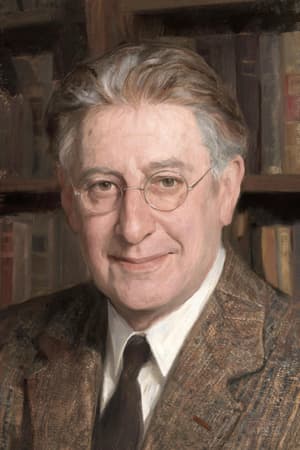
John Hick: Theodicy, Religious Pluralism & Soul-Making
Wisdom Concepts
No published record
Quotation archive
Selected Quotes
“Men are so made that they are capable of attaining, through their own free responses, the greatest possible individual and personal fulfilment... The world is not a paradise of hedonistic happiness... but a place of soul- making, in which the human person, through the discipline of moral effort, through struggle and suffering, may be brought from the self-centredness of primitive human nature to the other-centredness of the fulfilled child of God.”
“In its simplest form the problem is this: God is omnipotent; God is wholly good; and yet evil exists... These propositions are, at first sight, inconsistent: if they are all true, God cannot be wholly good, or cannot be omnipotent... I think, however, that we can show that there is no valid solution of the problem.”
“The world of our experience consists of a visible and an invisible portion... the visible world is part of a more spiritual universe, from which it draws its chief significance; and that union or harmonious relation with that higher universe is our true end.”
Biography
John Hick was born in 1922 in Scarborough, Yorkshire, and raised in a strict nonconformist Protestant household. He studied law before turning to philosophy, earning degrees from Edinburgh, Cambridge, and Princeton Theological Seminary. His early intellectual life was shaped by an evangelical conversion experience, and his first book, Christian Faith and Life (1950), was written from within that perspective. But Hick's thought moved steadily away from confessional Christianity toward a broader, more philosophical engagement with religion. He held teaching posts at Cornell, Princeton Theological Seminary, Cambridge, and Birmingham, and it was during his twenty years at Birmingham (1963–1982) that his major ideas took shape.
Hick's career falls into two large phases. The first, culminating in Evil and the God of Love (1966; revised edition 1978), was a sustained engagement with the problem of evil. The second, culminating in An Interpretation of Religion (1989), was an ambitious attempt to build a philosophy of religious pluralism — a framework in which all the major world religions are understood as valid, culturally conditioned responses to a single ultimate reality. Hick received the Grawemeyer Award for Religion in 1991, one of the field's highest honors, and his work remains among the most widely discussed in the philosophy of religion.
He died in 2012, having spent his last decades writing prolifically on death, the afterlife, religious diversity, and the epistemology of religious experience. His autobiography, Between Faith and Skepticism (1997), captures the trajectory of a thinker who moved from confident faith to a position he described as "religious skepticism" — not the rejection of religion but the insistence that all religious claims, including his own, must be held with epistemic humility.
Key Ideas
The Irenaean Theodicy and Soul-Making
Hick's most influential contribution is the Irenaean theodicy, developed in Evil and the God of Love. The name comes from the second-century Church Father Irenaeus of Lyon, who, unlike Augustine, did not treat the world as originally perfect and then ruined by the Fall. Instead, Irenaeus suggested that human beings were created in the "image" of God but not yet in the "likeness" — that is, created with the capacity for moral and spiritual development but not born already perfect. The world, on this view, is not a finished paradise but a workshop of character formation, a place where souls are made.
Hick took this patristic insight and built it into a full theodicy. The central claim is that a world designed for soul-making — for the development of moral character through free choices, struggle, and growth — cannot be a world without suffering. Courage requires danger; compassion requires suffering; forgiveness requires wrongdoing; patience requires frustration. A world in which these goods are possible is necessarily a world in which evil and suffering are also possible. The existence of evil, on this account, is not a flaw in creation but a condition of the kind of creation God intends: one in which human beings, through their own choices, grow into the likeness of God.
This is quite different from the Augustinian theodicy, which explains evil as a consequence of human sin — the free misuse of a good will. The Augustinian account, Hick argued, faces a structural difficulty: if human beings were created perfect and in a perfect world, how could they choose to sin? What would motivate a perfectly content creature to rebel? The Irenaean account avoids the difficulty by denying that human beings were ever created perfect. We are, on this view, works in progress, placed in a challenging environment because challenge is the means of our growth. The Fall, if it is to be understood literally, is not the origin of evil but a stage in the soul-making process.
Epistemic Distance and the Vale of Soul-Making
A crucial element of Hick's theodicy is the concept of epistemic distance — the idea that God deliberately does not make His presence overwhelming and unmistakable, because such certainty would overwhelm human freedom. If God's existence were as obvious as the sun in the sky, free and spontaneous love would be impossible: we would obey not from choice but from certainty, the way one avoids stepping off a cliff. By maintaining a certain distance — by leaving His existence a matter of faith rather than compulsion — God creates the conditions for a genuine relationship, one freely entered into rather than coerced by evidence.
The world, then, is a vale of soul-making — a phrase Hick borrowed from the English poet John Keats. It is a place that appears, on the surface, morally and religiously ambiguous, so that human beings can respond to it — or fail to respond — freely. The suffering in the world is part of this design: not gratuitous cruelty but the necessary cost of an environment in which moral growth is possible. Hick is careful to say that this does not make every instance of suffering good; it makes the existence of suffering, in a world designed for soul-making, understandable. The theodicy is an attempt to show that evil and the God of love are compatible, not to explain away each individual pain.
This is where Hick's theodicy intersects with the afterlife. Hick recognized that a soul-making theodicy faces an obvious objection: many people suffer without any apparent growth, and many die before their character is formed. If soul-making is the purpose of suffering, it must be allowed to complete itself, and that requires the possibility of continued existence after death. Hick therefore argued that his theodicy is eschatological — it depends on the promise that the soul-making process continues beyond this life and is brought to completion in an afterlife. Without the afterlife, the theodicy fails; with it, the goods that suffering is meant to produce can eventually be realized, and the appearance of waste or injustice can be redeemed.
Religious Pluralism and the Real an sich
Hick's later work took a dramatic turn from theodicy to pluralism. In God and the Universe of Faiths (1973) and An Interpretation of Religion (1989), he developed what he called the pluralist hypothesis: that the major world religions are all, in their own ways, valid responses to the same ultimate reality, which he labeled the Real an sich — borrowing the Kantian term for the thing-in-itself, the reality as it is apart from human perception.
The argument begins from an observation about religious diversity. The world's great religions — Christianity, Islam, Judaism, Hinduism, Buddhism, and others — each claim to disclose ultimate truth, and they make claims that are, in some respects, incompatible. If Christianity is true in its specific claims about Jesus, then Islam, which denies those claims, is false in that respect, and vice versa. But, Hick argued, we have no standpoint from which to declare one tradition correct and the others mistaken. Each religion is a culturally conditioned interpretation of an encounter with the transcendent, and there is no neutral, culture-free standpoint from which to adjudicate among them.
The pluralist hypothesis holds that the Real — the ultimate reality that the religions are responding to — is in itself beyond the grasp of human conceptual schemes, just as, on Kant's view, the thing-in-itself is beyond direct human cognition. The religions are the forms in which the Real appears to different human cultures: as the personal God of theism in the Abrahamic traditions, as the impersonal Brahman of Advaita Vedanta, as the Dharmakaya of Mahayana Buddhism, as the Tao. These are not rival descriptions of the same reality but different culturally shaped apprehensions of a reality that exceeds them all. Each tradition is, on this view, a valid but limited response to the Real — valid because the encounter is genuine, limited because the cultural forms through which it is interpreted are not the thing itself.
This is a radical claim, and it has generated enormous debate. Critics from within the traditions have argued that Hick's pluralism is not genuinely neutral but itself a metaphysical position — one that, by placing all religions under a single umbrella of "the Real," effectively redefines them from the outside and denies the specific claims that give them their content. Hick's response is that the pluralist hypothesis is not a claim to superior knowledge but a proposal about how to understand religious diversity in the absence of a decisive adjudication among the traditions. It is, he said, an interpretation of religion, not a religion.
Evil, Eschatology, and Universal Salvation
Hick's theodicy and his pluralism are connected through his eschatology. He was a universalist — he believed that the soul-making process will ultimately succeed for all, and that no one will be permanently lost. This is not a sentimental position; it is, for Hick, a logical consequence of the theodicy. If God's purpose in creation is soul-making, and if that purpose is loving and effective, then it must eventually achieve its aim for every soul. A God who creates beings for the purpose of moral and spiritual growth and then consigns some to eternal failure would be neither loving nor good. Hell, on Hick's view, cannot be permanent; it must be, at most, a stage in the soul-making process, a purgative rather than a final state.
This eschatological universalism connects to the pluralism as well. If the soul-making process operates across religious boundaries — if Muslims, Buddhists, Hindus, and Christians are all engaged in the same project of moral and spiritual development — then the pluralist hypothesis gains support from the theodicy. The various religions are, on this view, different paths up the same mountain, different cultural forms of the same universal soul-making process. Hick acknowledged that this is a revisionary position from the standpoint of most traditions, but he argued that it is the most coherent account of the data of religious diversity and the most theologically satisfying response to the problem of evil.
Influence and Legacy
Hick's influence is wide and deep. The Irenaean theodicy is now a standard option in the philosophy of religion, discussed alongside the Augustinian, the free will defense of Plantinga, and the skeptical theism of Stephen Wykstra and Paul Draper. It is the most fully developed non-Augustinian theodicy in the Western tradition, and it has the virtue of taking the evolutionary picture of the world seriously — of integrating the long prehuman history of life, with all its suffering, into a theistic framework.
The pluralist hypothesis has been even more influential, and more controversial. It has become the standard reference point in the theology of religions — the framework that exclusivists, inclusivists, and pluralists all define themselves against. Hick's critics include Swinburne, who defends a more traditional Christian theism; Plantinga, whose Reformed epistemology makes room for specifically Christian belief without Hick's universalist framework; and many theologians who argue that the pluralist hypothesis empties the religions of their specificity. But even critics concede that Hick posed the question of religious diversity with a clarity and urgency that no one before him matched, and that any adequate theology of religions must respond to his framework.
Hick's legacy also extends to the popular understanding of religion. The image of religions as "different paths up the same mountain" — a phrase often attributed to Hick — has passed into common speech, and the idea that religious diversity can be embraced rather than feared is, in many quarters, simply taken for granted. For readers approaching the philosophy of religion, the problem of God, and the question of how to live in a religiously diverse world, Hick remains the essential guide.
Further Reading
The primary texts are Evil and the God of Love (2nd edition, Macmillan, 1985) for the theodicy, God and the Universe of Faiths (Macmillan, 1973) for early pluralism, and An Interpretation of Religion (Macmillan, 1989) for the mature pluralist hypothesis. The Fifth Dimension (Oneworld, 1999) presents his thought for a general audience. For critical engagement, see David Cheetham, John Hick: A Critical Introduction and Reflection (Ashgate, 2003), and the Stanford Encyclopedia of Philosophy entry "The Problem of Evil." The Internet Encyclopedia of Philosophy entry on the problem of evil provides a clear comparison of Hick's Irenaean approach with the Augustinian tradition.
Learning Path
Part of a Structured Collection
Religion, God & the Sacred: The Philosophy of Religion Learning Path
A structured learning path through the philosophy of religion: from the philosophy of God and the problem of evil to atheism, faith, religious experience, miracles, prayer, sin, and the sacred.
Continue learning path →
Death & Mortality: The Philosophy of Dying and Meaning
A learning path through the philosophy of death: Epicurus and the Stoics on why death should not frighten us, Heidegger on being-toward-death, and the ethics of dying and grief.
Continue learning path →
Continue Learning
Knowledge NetworkNext Step
Continue your learning path
- topic
God: The Philosophy of the Divine
Related through Philosophy Of God
- collection
Religion, God & the Sacred: The Philosophy of Religion Learning Path
Related through Philosophy Of God
- book
The City of God by Augustine of Hippo
Related through Philosophy Of God
- quote
Hick on Soul-Making: The World as a Place of Moral Growth
Related through Philosophy Of God
- thinker
Alvin Plantinga: Reformed Epistemology & the Free Will Defense
Related through Philosophy Of God
- book
Dialogues Concerning Natural Religion by David Hume
Related through Philosophy Of God
- philosophy
Philosophy of God
Related through Philosophy Of Religion
- thinker
Rudolf Otto: The Numinous, the Holy & the Philosophy of Religion
Related through Philosophy Of God
Archive references
Sources
- 01The Problem of EvilBy Stanford Encyclopedia of PhilosophyMurray, Michael, and Michael Rea. 'The Problem of Evil.' Stanford Encyclopedia of Philosophy.Consult source
- 02The Problem of EvilBy Internet Encyclopedia of PhilosophyMaben, Jeff. 'The Problem of Evil.' Internet Encyclopedia of Philosophy.Consult source
- 03Evil and the God of LoveBy John HickJohn Hick. Evil and the God of Love. 2nd ed. London: Macmillan, 1985.
- 04An Interpretation of ReligionBy John HickJohn Hick. An Interpretation of Religion: Human Responses to the Transcendent. London: Macmillan, 1989.
Source and quality checks completed
Quality check completed 2026-08-21